
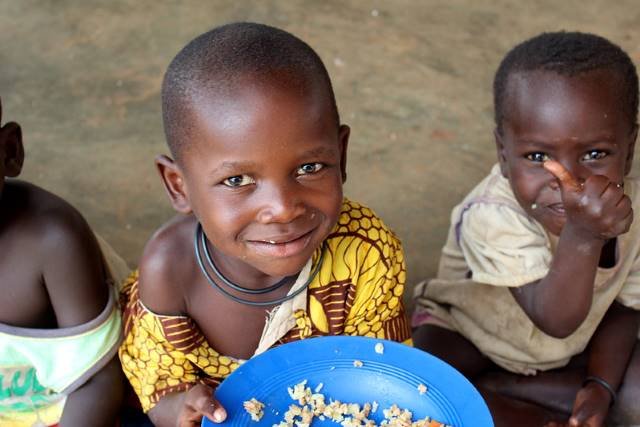
Government’s own weather forecasts predict worsening conditions; experts call for urgent action on food systems governance
KAMPALA, July 9, 2026. At least 18 people have been reported dead from hunger in Kotido since June, as a prolonged dry spell devastates the region. The drought began in March, immediately after what was thought to be the onset of the rainy season. Today, over five thousand hectares of crops worth 200 billion shillings have been destroyed. Families now survive on beer remnants locally known as “Adakai,” and children who should be in school have turned to mining for gold and quarrying sites to earn money for food.
However, this hunger crisis is not an isolated incident. The Karamoja sub-region has experienced repeated food crises over the years, dating back to the 1990s and heightening in 2022 when over 2,124 deaths were registered due to drought-induced hunger (Uganda Human Rights Commission Report, 2022). In 2025, the Integrated Food Security Phase Classification (IPC) Acute Food Insecurity (AFI) analysis Report noted that up to 30% of people in Karamoja faced high levels of acute food insecurity between April and July 2025 and 20% of people in the region were expected to be in a food crisis by February 2026.
Inaction Amidst Drought Forecasts Beyond Karamoja.
The current crisis was foretold by credible national sources. The Ministry of Water and Environment predicted a prolonged dry spell from June to August driven by El Niño conditions. The Uganda National Meteorological Authority anticipated the drought to spread across much of the country, threatening not just the arid northeast, but also other food basket districts across Southwestern, Central, and Eastern Uganda. For instance in Isingiro District, acres of maize, beans, and bananas have withered as rains continue to evade the region. Further, schools across the Lango sub-region are increasingly sourcing food from western Uganda as local shortages disrupt feeding programmes. The Food and Agriculture Organization has warned that if the forecasts materialize, harvests in bimodal rainfall areas are likely to be significantly reduced.
On this, the Executive Director at Food Rights Alliance noted, “To us at FRA, this is not a surprise. It is a pattern. The Karamoja region has endured decades of government interventions, donor programmes, and countless strategic frameworks. Yet hunger persists with grim predictability. We have the data. We have the forecasts. We have every reason to prepare. Yet here we are burying our dead and rationing relief.”
Rising Prices of Food Staples
The food crisis is being worsened by the rising cost of basic food staples across Uganda, making it harder for poor households to afford even the most common foods. Posho is now selling at about UGX 2,500 per kilogram, rice at about UGX 4,000 per kilogram, while five fingers of matooke cost around UGX 1,000. For families in Karamoja and other food-insecure areas, this means that even where food is available in markets, many households cannot afford enough to eat.
A Governance Failure, Not a Weather Failure
We have repeatedly called on the Office of the Prime Minister to prioritize early warning signs of drought and hunger and set aside plans and resources for timely responses. Parliament has been urged to expedite the National Food and Nutrition Bill to protect the right to food.
Cabinet has been called upon to fast track the approval of the revised Food and Nutrition Policy 2003
Yet Recommendations Gather Dust While People Die
“The Karamoja hunger crisis is not primarily a climate crisis. It is a governance crisis,” Agnes Kirabo added. “The region has adequate rainfall and water route from Masaba and Sebei regions to achieve food self-sufficiency. What it lacks is political will to strategically invest in a full-blown water infrastructure to boost production in the region. We have repeatedly called on the Office of the Prime Minister to prioritize early warning signs of drought and hunger and set aside plans and resources for timely responses. However, timely release of food aid remains a challenge. As such, What Karamoja lacks is accountable governance that treats the right to food as non-negotiable.”
Urgent Actions Required
The government of Uganda at both national and sub-national levels must immediately implement the following responses:
- Activate emergency food relief for all drought-affected districts immediately, not after more lives are lost. Currently, families copping mechanisms are not dignifying and reliable to save the situation.
- Release contingency funds to district disaster management committees to enable rapid local response. The OPM and line ministries should release funds for response and mitigation.
- Operationalize early warning systems so that meteorological forecasts trigger automatic, pre-funded response mechanisms. The State of Parish Economic Affairs ( SPEAR) reports from parishes could provide timely data on food security. These to strike immediate actions
- Invest in water infrastructure in Karamoja as a strategic sustainable approach to addressing hunger challenges of the region.
- Expedite the approval of the revised Food and Nutrition policy 2003 and enactment of the National Food and Nutrition Bill to strengthen the country’s food governance architecture.
- Regulate agricultural inputs to protect farmers from counterfeit seeds and fertilizers that undermine crop production.
- Strengthen local food systems by fully resourcing the “Karamoja Feeds Karamoja” initiative and shift from aid to local food procurement.
- Address root causes of chronic poverty through long-term investment in education, health, infrastructure, and economic diversification.
For more information or to arrange interviews, contact:
- Food Rights Alliance
- Communications Department
- communications@frauganda.org