
Civil Society Organizations call for the reversal of the proposed 20% budget cut to the Agro-Industrialisation Programme in the National Budget Framework Paper (NBFP) 2026/27, warning that the reduction threatens Uganda’s food security, nutrition outcomes, and rural livelihoods.
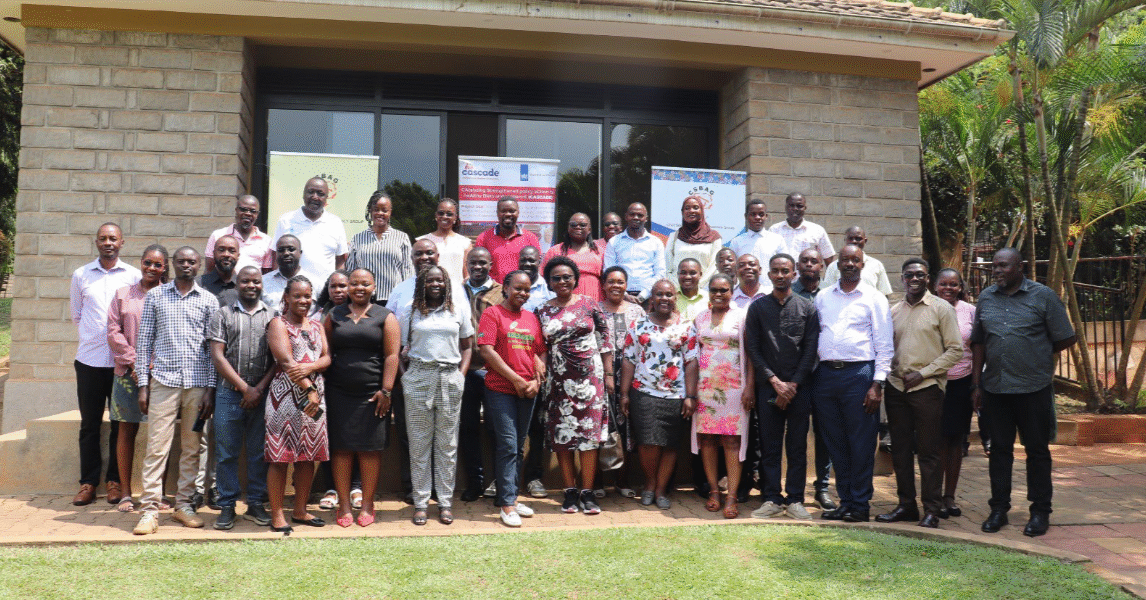
This call was made during a two-day Civil Society Organisation (CSO) Retreat on the NBFP 2026/27, co-convened by Food Rights Alliance (FRA) under the CASCADE Project in partnership with the Civil Society Budget Advocacy Group (CSBAG Uganda) at Esella Country Hotel. The retreat brought together CSOs working in agriculture, nutrition, natural resources, and budget advocacy to conduct an in-depth analysis of the proposed national budget and develop evidence-based alternative proposals to influence national priorities as per the NBFP 2026/27.
According to the NBFP 2026/27, the Agro-Industrialisation Programme is projected to receive UGX 1.47 trillion, down from UGX 1.86 trillion in FY 2025/26, a reduction of over UGX 387 billion. CSOs warned that this decline undermines Uganda’s commitments under the National Development Plan IV (NDP IV) and the Comprehensive Africa Agriculture Development Programme (CAADP), which prioritise agro-industrialisation as a driver of economic transformation, food security, and job creation.
CSOs noted that agriculture employs over 70% of Uganda’s population and remains the backbone of rural livelihoods. Reducing investment in this sector risks reversing gains in productivity, post-harvest loss reduction, irrigation expansion, and value addition, while deepening food and nutrition insecurity among vulnerable households.
Beyond the call to restore funding, CSOs outlined a wider set of proposals aimed at strengthening the overall impact of the Agro-Industrialisation Programme. They emphasised the urgent need to recruit and better facilitate agricultural extension workers at parish and sub-county level so that farmers can access practical technical support. Participants also highlighted food safety as a growing concern, particularly the challenge of aflatoxin contamination along key crop value chains, and called for stronger prevention and control measures.
To ensure that agricultural investments contribute directly to better diets, CSOs urged Government to prioritise nutrition-sensitive production by supporting diverse and nutrient-rich crops and strengthening food quality standards. Other proposals focused on reducing reliance on external financing through increased domestic investment, improving the performance of agro-processing facilities, and tightening regulation to curb the spread of counterfeit agricultural inputs. CSOs further called for faster progress on key policy and legal reforms, including the Food and Nutrition Bill and the National Agro-Inputs and Food Safety Authority Bill, to create a stronger foundation for safe, inclusive, and nutrition-responsive agro-industrialisation.
Evidence from Previous Advocacy
The retreat also reviewed advocacy outcomes from the NBFP 2025/26, demonstrating that CSO engagement has delivered tangible results. In the previous budget cycle, CSO proposals led to the revision of the UGIFT beneficiary co-financing requirement to 10%, improving access to micro-scale irrigation systems for farmers, and an additional UGX 33 billion allocation to the Ministry of Water and Environment for water for production. In addition, management of agricultural extension services was transferred to MAAIF, with UGX 17 billion allocated for extension equipment.
Looking Ahead
The CSO Position Papers developed through this process were presented to the relevant Parliamentary Committees to inform scrutiny of the NBFP 2026/27 and promote accountability in budget decision-making.
CSO Position Paper on the Agro-Industrialization Programme in Response to NBFP 2026/27 – https://fra.ug/wp-content/uploads/2026/03/AGI-CSO-Position-Paper.pdf
CSO Position Paper Integrating Nutrition in the NBFP 2026/27 – https://fra.ug/wp-content/uploads/2026/03/Nutrition-CSO-Position-Paper.pdf