
If you work in agriculture, environment, education, nutrition, or trade in Uganda, you have likely felt this frustration: The Ministry of Agriculture pushes for increased production and productivity. The Ministry of Trade opens borders for competing imports. The Ministry of Water and Environment promotes biodiversity and efficient water resource use. And the Ministry of Health wonders why malnutrition rates are not dropping while obesity is on the rise, with associated non-communicable diseases among children of school-going age.
Everyone is working hard. But are we working together?
That is the $64 billion question and it is exactly why the Office of the Prime Minister, alongside the Food and Agriculture Organization (FAO), the Global Alliance for Improved Nutrition (GAIN), and AKADEMIYA 2063, called us to the table.
The Hard Truth: Uganda’s Agri-Food Systems by the Numbers
Let us start with some sobering statistics that tell the real story:
Malnutrition cuts both ways:
- 26% of Ugandan children under five are stunted, with prevalence more pronounced in the rural areas of Karamoja Kigezi and Northern Uganda. That isn’t just a health statistic it’s a sign of a broken link between farm productivity and family plates.
- 44% of children under five are anemic.
- At the same time, 32.3% of school-aged children (3–16 years) are obese, with 21.7% overweight.
- Non-communicable diseases now claim 33% of all deaths in Uganda, and childhood diabetes has doubled since 2013, with over 200,000 children affected.
- Among adults, 24% of women of reproductive age and 9% of men are overweight.
The agricultural paradox:
- Agriculture employs between 68% and 72% of Uganda’s workforce and contributes approximately 24% of the country’s GDP.
- Yet, despite accounting for 24% of GDP, 56% of exports, and 71% of employment, Uganda has historically lacked cohesive policy frameworks.
- Over 12 million Ugandans continue to face food insecurity, and more than 72% of the country’s population cannot afford a healthy diet.
The environmental squeeze:
- Between 1994 and 2008, Uganda lost approximately 30% of its wetland coverage, with encroachment driven primarily by agriculture, urban expansion, and industrial activity.
- Eastern Uganda has lost approximately 75% of its wetlands due to human activities driven by the search for livelihood opportunities.
- National Environment Management Authority (NEMA) estimates that wetland coverage now stands at only 10–15% of the country, down significantly from historical levels.
The Game-Changing Frameworks: Food Systems Transformation Action Plan (FSTA) and Kampala CAADP Agenda
We are at a historic moment. Uganda is soon launching the Food Systems Transformation Agenda (FSTA 2025/26–2029/30) and aligning with the new Kampala CAADP Declaration (2026–2035) and the National Development Plan IV.
The Kampala CAADP Declaration sets ambitious continental goals: increase agrifood output by 45 percent, triple intra-African trade in agrifood products, reduce stunting, wasting and obesity by 25 percent, ensure that 60 percent of the population can afford a healthy diet, and decrease the number of people living in extreme poverty by 50 percent.
The fourth National Development Plan (NDP IV, 2025/26–2029/30) places agri-food system transformation at the core of Uganda’s strategy for economic growth, poverty reduction, and sustainable development.
However, a roadmap is useless if no one agrees on the direction of travel. As Ivan Lule, Deputy Chairperson of the National Planning Authority, rightly noted: “Since food systems fall in many programmes there is need to work towards common results, break the silos and avoid duplications”.
Where the Policy Incoherence Bites Hardest
Here are some concrete examples of policies pulling in opposite directions:
1. Production vs. Environment:
The Ministry of Agriculture promotes increased production, including the expansion of rice and other water-intensive crops. Yet the National Environment Management Authority (NEMA) has ordered the eviction of illegal wetland occupants, warning that encroachment driven by agriculture has significantly degraded wetlands, exposing communities to flooding, water shortages, and declining fish stocks. The degradation rate of wetlands in Mbale District stands at 65%, which is alarmingly high. Farmers are being told to vacate the very land some policies encouraged them to cultivate.
2. Trade vs. Nutrition:
The Ministry of Trade opens borders for cheaper imports, including ultra-processed foods loaded with sugar, salt, and trans fats, some costing as little as UGX 500. Meanwhile, the Ministry of Health is battling an obesity epidemic, with 32.3% of school-aged children obese and NCDs now claiming one in three deaths. We in civil society are urgently calling for the regulation of junk food marketing to children, including a ban on junk food in school canteens and the implementation of the recently approved Nutrient Profiling Model. Yet the same government that promotes trade liberalization has been slow to regulate the very products flooding in.
3. Agriculture vs. Climate Resilience:
The CAADP framework prioritizes yields and export potential, but critics argue it distances itself from agroecology and food sovereignty. As Civil Society, we desire sustainable food systems where adoption of agroecology and food sovereignty is the key to unlock that disconnect. The frameworks also fail to clarify how to address the crisis of chronic toxicity from Highly Hazardous Pesticides (HHPs), which are already banned in Europe but still authorized for use on African farms, with 95% of pesticide-related poisonings occurring in low-income countries.
4. Cross-Cutting Interventions That Require Collaboration:
The reality is that no single ministry can solve these challenges alone. Here are interventions that must cut across sectors and why they matter;
- Fortification of staple foods requires the involvement of Agriculture, Health, and Trade. This intervention addresses both undernutrition (micronutrient deficiencies) and overnutrition (by displacing empty calories)
- School feeding programs require Education, Agriculture, and Health. The intervention provides market for smallholder farmers while improving child nutrition and learning outcomes
- Wetland-friendly farming (e.g., aquaculture) requires the cooperation of the Environment, Agriculture, and Local Government. The intervention restores ecosystems while providing sustainable livelihoods for communities evicted from wetlands
- Regulation of junk food marketing requires Trade, Health, and Education. The intervention protects children while creating market incentives for healthier local food processing
- Climate-smart agriculture extension requires Agriculture, Environment, and Finance. The intervention builds resilience without sacrificing productivity
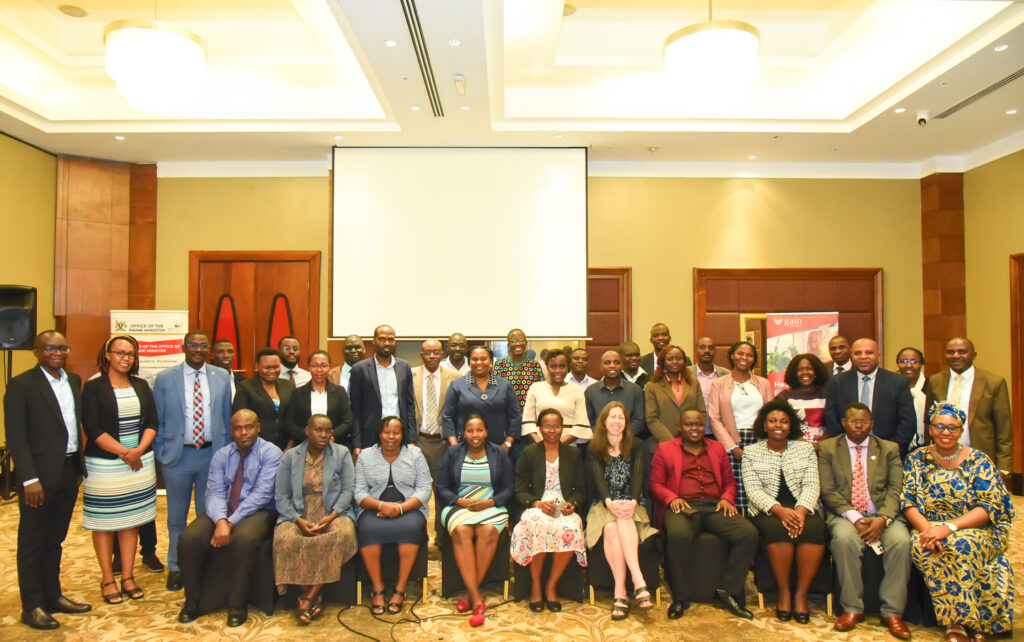
What Exactly Happened at the Food Systems Policy Coherence Workshop?
We didn’t just come to listen to speeches. We rolled up our sleeves to map out the “who does what” mess. We looked for:
The Gaps: Which policies are missing? Despite the existence of the National Food Systems Coordination Committee established in 2022, many policies addressing key food security priorities remain inadequately funded, and there is no efficient and coordinated mechanism for monitoring, evaluation, and information-sharing.
The Overlaps: Where are two ministries doing the same job badly? Fragmented, short-term, project-based approaches have historically dominated, rather than coherent, long-term programme-based interventions.
The Trade-offs: How do we grow more food while caring for Mother Earth? The tension between production-focused policies and environmental conservation remains unresolved.
A Word to My Fellow CSOs
We often sit outside the room or prefer to dive deep and work with farmers, entrepreneurs, Village Saving and Lending Associations, and when frustrated, host dialogues, complain, and sometimes make lists of recommendations.
This time, we were invited inside to help build the house. If we had not shown up with evidence on the discrepancies, the conversation would have been owned by technocrats alone. True resilience comes from participation, joining cooperatives, attending local planning meetings, leveraging programs like PDM for training and inputs, and holding duty bearers accountable. We must be hands-on, show up with evidence, and voice alternatives.
The Bottom Line is that policy coherence sounds like boring bureaucracy. But for a mother in Karamoja or a maize farmer in Kamuli, it is the difference between surviving and thriving.
The struggle for mandates is not a fight to deliver but perhaps a scramble for power and resources. Uganda is a policy-rich country, but translating policy into action is often constrained not by limited resources alone, but by contradictions, competition, and mandate strikes.
The Policy Coherence Assessment framework, designed by the UN Food Systems Accelerator partners, is an innovation to support countries in technically appreciating their complementary roles. This, however, needs to be context-specific. Whether this will break the mind and moral invisible walls upon which the silos are built depends entirely on the political will to break and mend.
Let us make sure Uganda’s policies stop fighting each other and start feeding the nation. The time for fragmented approaches is over. The time for coherence is now.