
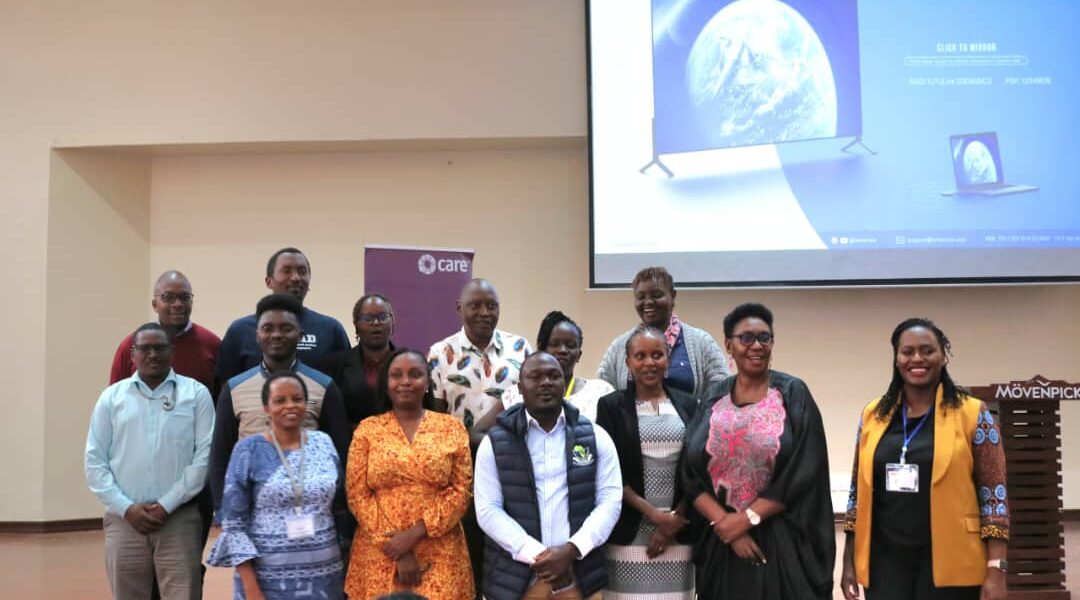
There I was, sitting in a packed hall in Nairobi, watching something extraordinary unfold.
For years, I have walked the long road of the Comprehensive Africa Agriculture Development Programme (CAADP). I have been in the trenches advocating for the 10% budget allocation, pushing for the 6% agricultural growth target, and holding governments accountable to Maputo and Malabo commitments. And honestly? I have also watched us fail. Not because we did not work hard. But because we worked in parallel.
The advocacy Civil Society Organizations stayed in Nairobi, crafting policy briefs. The humanitarian CSOs rushed seeds to emergencies. The development CSOs ran pilot projects in counties. Brilliant people. Important work. But rarely speak to each other.
Until now: A New Dawn in Kenya
Last week, I witnessed Kenyan Non-State Actors (NSAs) do something I have been praying to see for nearly two decades. They sat down together, farmers, women’s groups, youth networks, researchers, budget trackers, and decided to break the silos.
No more competing for visibility. No more duplicating efforts. No more wondering why our collective voice sounded like a whisper when it should have been a roar.
What changed? The Kampala CAADP Declaration.
Adopted in January 2025 and launched in May 2025, Kampala is not just another document. It represents a fundamental shift. If Malabo was about intensifying agriculture, Kampala is about transforming food systems.
And Kenyan CSOs have decided to align.
Why Kampala? Why Now?
Let me be honest with you. The Malabo era gave us the concept of Zero Hunger and the Biennial Review Report accountability mechanism. We celebrated progress in some indicators. But we fell short on others. Why? Because a siloed approach focusing only on production and productivity was never going to be enough.
Climate shocks are no longer a distant threat they are our planting season reality. Geopolitical tensions squeeze our supply chains. The cost of food has become a political tinderbox. And the youth? They are looking at agriculture and asking, “Is there a future for me here?”
The Kampala Declaration answers that question. It says:
1. Resilience – Building food systems that can withstand drought in Turkana and floods in Budalangi
2. Agro-industrialization – Moving beyond raw exports to value addition and decent jobs
3. Health and Nutrition – Breaking down the wall between agriculture and health
4. Inclusive Growth – Ensuring smallholders, women. Youth and the marginalized are not left behind
This is not a rejection of the past. This is Africa saying, “We have done the basics. Now we must do the complex.”
The Kenyan Secret Sauce: 8 Principles That Build Trust
So how did Kenyan NSAs move from competition to collaboration? They did not just sign a nice declaration. They got practical. Let me share the eight principles that are now guiding their work. Principles that any country can adopt:
1. A Common Agenda
They adopted a co-created simple, written compact as a result of a comprehensive mapping exercise that sped up NSA’s core work to Kampala’s pillars. In principle, when everyone sees how their specific mandate fits into a shared goal, competition gives way to complementarity.
2. Mutual Accountability
They committed to establishing a joint monitoring framework where NSAs hold each other accountable, not just the government. They agreed to publish collective citizen position papers and policy briefs on the Biennial Review indicators.
3. Data Commons
They committed to creating a shared agreement on data sharing for grassroots indicators. No more data silos. No more fighting over who has the “real” numbers.
4. County-Led Collaboration
They organised themselves in recognition of county-level NSAs that mirror Kenya’s devolved structure and National-level NSAs to act as enablers, not controllers.
5. Joint Advocacy with Clear Red Lines
They agreed to develop non-negotiable positions while allowing flexibility on tactics. Leveraging one’s own capabilities, skills, and positioning.
6. Resource Fluidity
They agreed to pool all forms of resources together in order to sustain through advocacy. Sharing resources creates interdependence.
7. Learning and Reflection
They agreed to hold regular reflection labs where NSAs openly discuss failures and successes. These labs are where psychological safety turns vulnerability into deeper collaboration.
8. Succession and Representation
They deliberately agreed to rotate leadership roles and ensure women, youth, and marginalized groups are part of decision-making.
Three Pillars of Action for Kenyan NSAs
During the workshop, one leader stood up and said something that stuck with me: “We must expand our frontiers from service delivery to system stewardship.”
Here is what that looks like in practice:
First, capacity development for county governments. Agriculture is a devolved function in Kenya. NSAs should now support county leadership to budget and plan according to Kampala’s targets, not just routine cycles.
Second, strengthening producer organizations. If we want agro-industrialization, smallholders must aggregate. NSAs should incentivize investments in cooperatives to become business entities, not just social welfare groups.
Third, bridging the youth and climate gaps. The old narrative that “youth shun agriculture” is fading. But we need to accelerate solutions that make agrifood systems economically viable with predictable cash flows. NSAs should push for financing instruments accessible to young agri-preneurs, not just loans, but patient capital.
A Call to Other African Nations
To my colleagues in Cameroon, Zambia, Madagascar, Togo, and Nigeria, yes, the six countries where this initiative is supported by GIZ let me tell you something.
What happened in Kenya was not magic. It was hard work. It was choosing collaboration over ego. It was decided that the farmer in Kakamega, the pastoralist in Marsabit, and the agri-preneur in Kiambu deserve better than fragmented efforts.
If Kenya can do it, so can you.
Start small. Pick two or three of the principles above. Pilot them. Use the lessons to scale. The goal is not a new institution. The goal is a trusted way of working that turns the Kampala Declaration from a continental document into a shared national mission.
To Governments and Development Partners
I want to state that Non-State Actors are set for their complementary role. We are your partners in this journey of a decade. We have the expertise. We have the networks. We have the trust of communities. But we need you to support us not with control, but with genuine partnership.
Create spaces for us in planning processes. Share budget data with us. Invite us to Joint Sector Reviews. Take our citizen-generated reports seriously.
And to development partners like GIZ, who are already walking this journey with us in six countries, thank you. But we need more of you. Invest in NSA coordination, not just individual projects. Fund our platforms, not just our activities. Believe that when we align our passion with policy architecture, transformation happens.
The Road Ahead
Colleagues, the vision of an Africa free from hunger and poverty is still within reach. But it will not be achieved by governments alone. It will not be achieved by donor projects alone.
It will be achieved when we, the NSAs, align our passion with the Kampala Declaration.
Kenyan NSAs have chosen to do the hard work of alignment. They have chosen to hold the line on accountability. And they have chosen to transform food systems together.
Let me leave you with this challenge: What will your country choose?