

Today, Food Rights Alliance joined fellow civil society organizations SEATINI, Food Safety Coalition Uganda, Global Consumer Centre, Participatory Ecological Land Use Management (PELUM) Uganda, CEFROHT, PELUM Association, and GEDA-Uganda for a joint Civil Society press conference held in Kampala. The engagement was convened under the theme: “Safeguarding Health, Environment, and Market Access through Safe Agrochemical Management.”
The press conference follows the recent directive by the Government of Uganda to ban and restrict 18 hazardous agrochemicals from the market. These substances have been linked to cancer and other serious health risks, raising significant public health and environmental concerns. The decision marks a critical step toward strengthening food safety, protecting ecosystems, and ensuring compliance with international market standards.
Food Rights Alliance commends the Government of Uganda and the Ministry of Agriculture, Animal Industry, and Fisheries for taking this bold and necessary action. The directive signals growing commitment to safeguarding both human health and environmental sustainability, while also protecting Uganda’s agricultural exports from potential rejection due to unsafe chemical residues.
However, civil society organizations emphasized that effective implementation of the directive will require inclusive and continuous dialogue among all stakeholders across the agricultural value chain. During the press conference, the Head of Programs at the Food Rights Alliance, Ms. Orochi Freda Laura, stressed the importance of engaging farmers, agro-dealers, policymakers, and private sector actors to ensure a smooth transition.
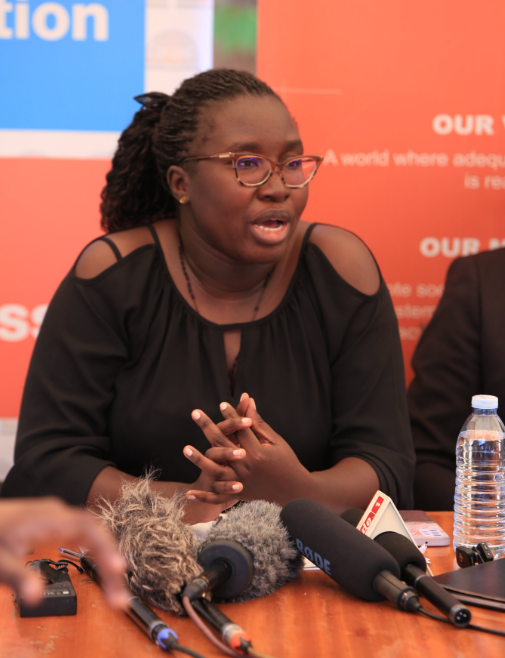
Ms. Orochi Freda Laura speaking to the media during the CSO Press Conference
She noted that the absence of structured dialogue could result in implementation challenges, including misinformation, non-compliance, and unintended disruptions in agricultural production. Additionally, she highlighted the urgent need to simplify and translate information about the banned agrochemicals into clear, accessible formats that farmers can easily understand and apply in practice.
As Uganda moves forward with enforcing these restrictions, stakeholders reaffirmed their commitment to supporting awareness creation, farmer education, and policy engagement to ensure that the directive achieves its intended outcomes without compromising livelihoods.