
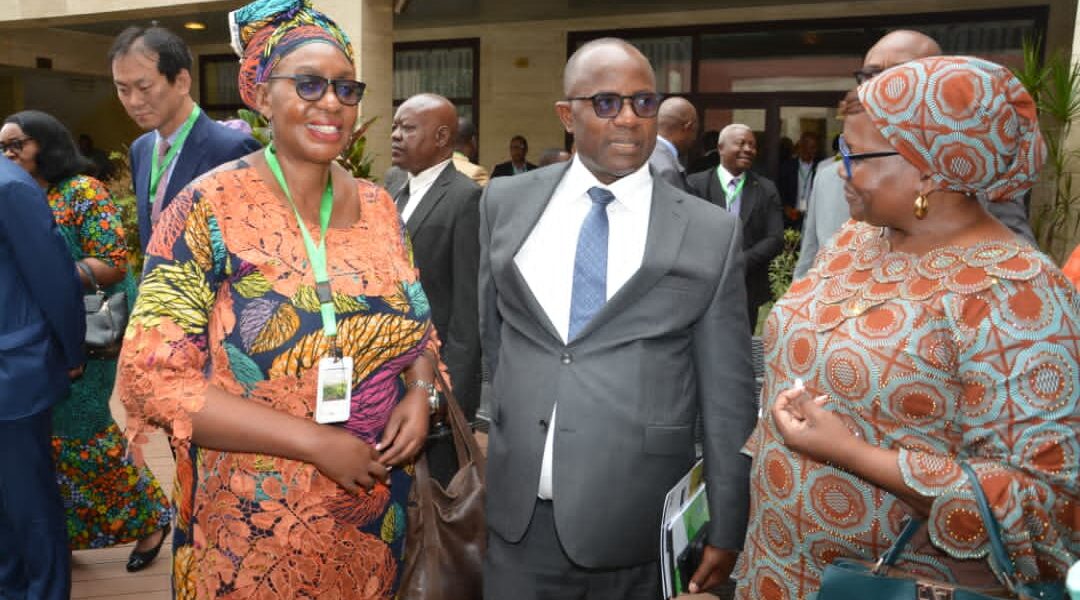
Reflections from the Yaoundé Stakeholders and CAADP Champions dialogue on the guide to Domesticating the Kampala CAADP Agenda.
I just returned from the consultative dialogue in Yaoundé, Cameroon (March 17-19, 2026). For three days, we dissected the new Kampala CAADP Implementation Guidelines. There was much talk about “domestication,” “NASIPs,” and “mutual accountability frameworks.” Important jargon. But here is the truth I need to share with both my fellow Non-State Actors (NSAs) and our government partners:
If we only talk about these guidelines in air-conditioned conference rooms, we have already failed.
The wind is changing. But to understand where we are going, we must first understand where we have been.
A Brief History of Promises: From Maputo to Malabo
The journey began in 2003 in Maputo, Mozambique. African leaders launched the Comprehensive Africa Agriculture Development Program (CAADP), committing to allocate at least 10% of national budgets to agriculture and achieve a 6% annual agricultural growth rate. The goal was noble: reduce poverty, end hunger, and revitalize agriculture through increased investment.
Then came 2014 in Malabo, Equatorial Guinea. Leaders renewed and broadened their commitments, aiming to end hunger, halve poverty, triple intra-African agricultural trade, and build resilience all by 2025. The Malabo Declaration introduced seven broad commitments, including mutual accountability through Joint Sector Reviews and a continental Biennial Review process.
But here is the hard truth: As of 2023, none of the AU member states were on track to meet the Malabo targets. Public investment in agriculture remained inadequate, with only a few countries meeting the 10% budget allocation goal. The 4th CAADP Biennial Review report in February 2024 confirmed what many already knew: the continent was off-track.
The recurring weakness was clear: political commitments without operational clarity. We had grand declarations, but there were no clear roadmaps for execution.
The Hard Numbers Don’t Lie: The Gap Between Aspiration and Reality
Today, the urgency is greater than ever:
· 278 million people in Africa are still facing chronic hunger (FAO, 2024).
· 307 million people more than one in five people in Africa faced hunger in 2024.
· By 2030, Africa will account for nearly 60% of the world’s chronically undernourished people.
· $70 billion annually is what Africa spends on food imports an unsustainable drain on our economies.
· $611 billion in agricultural production was lost between 1991 and 2023 due to climate disasters and natural hazards.
· Nearly 494 million hectares in sub-Saharan Africa are experiencing land degradation, costing an estimated $68 billion annually in lost productivity.
· 65% of Africa’s land is affected by degradation and drought, affecting more than 400 million people.
The Youth and Gender Paradox
Africa has the youngest population in the world. 75% of the population is under 35, and 60% is under 25. Across Sub-Saharan Africa, nearly 70% of working young people are employed in agri-food systems. Yet:
· Youth unemployment exceeds 50% in South Africa, Senegal, Nigeria, Namibia, Angola, Mozambique, Mauritania, and Botswana.
· The continent produces 9 million unemployed youth every year.
· Approximately 8 million young Africans enter the labor market each year, but decent jobs remain scarce.
And women? They produce 60-70% of our food but own only 15% of the land. Under the old framework, this was just “encouragement.” Under Kampala? It is a binding target to halve the gender yield gap by 2035 . Across the continent, only 38% of women report owning land (individually or jointly), compared to 51% of men.
The Climate and Soil Crisis
Africa is home to 9 of the 10 countries most vulnerable to climate change. With 70% of the continent dependent on small-scale rain-fed agriculture, changing weather patterns are devastating harvests. Global warming of 2°C would put over 50% of the continent’s population at risk of undernourishment.
The New Dawn: Kampala CAADP Agenda (2026-2035)
The new Kampala Agenda isn’t just an update. It is a revolution in execution.
Adopted in January 2025 at the AU Extraordinary Summit in Kampala, Uganda, the declaration outlines a 10-year roadmap with ambitious targets:
· Increase agrifood output by 45% by 2035
· Reduce post-harvest losses by 50%
· Triple intra-African trade in agrifood products
· Mobilize $100 billion in investments for agrifood systems
The Kampala framework introduces a four-part implementation cycle: governance diagnostics and analysis investment accountability and learning. It shifts from fragmented planning processes toward an integrated, implementation-focused, and investment-driven approach.
Here Is How We (State + Non-State) Align Our Actions
1. Stop “Participating” and start “Validating”: For years, NSAs were invited to “consultations” as a checkbox exercise. Kampala changes the game.
· The Guideline probides for “formal political approval” and “functional multi-stakeholder participation mechanisms.”
· NSAs Our must therefore move from spectators to co-owners. If your National Agrifood Systems Investment Plan (NASIP) doesn’t have the signature of the Farmer Organization or the Private Sector Chamber, send it back. No ownership, no implementation.
2. Demand the “bankable” over the “beautiful.” How many of our agricultural policies look good on paper but have zero budget lines?
· The Guideline says the need for “bankable business cases” with ROI (Return on Investment) and IRR (Internal Rate of Return) analysis.
· As Civil Society, we need to learn the language of the Ministry of Finance. Stop asking for “funding” and start presenting “investment dossiers.” Governments on the other hand should institutionalize the Joint Financing Coordination Group (JFCG) to track disbursements in real-time.
3. The “One Indicator” Rule: Simplifying Accountability. We used to get lost in a swamp of 50+ indicators. Malabo had a compliance approach. Kampala has a results approach.
· The Donestication Guideline indicates that the new Mutual Accountability Framework (MARLF) tracks 1 key result per target (22 total).
As NSAs, our job is to be the “watchdog” on those 22 numbers. Use the e-BR platform to hold leaders accountable. Do not ask. Did you spend the money? Ask. Did we close the nutrition gap for children under five?
4. The “Invisible” Pillar: Soil, Seeds & The Blue Economy. Kampala introduces hard technical actions that we cannot ignore.
· The Guideline highlights the need for national soil maps and regional seed banks.
As advocates, let us demand one specific thing this year: A national soil information system. It’s not a project, but a system. The Kampala Declaration also prioritizes the blue economy, harnessing Africa’s vast ocean, lake, and river resources for food security and livelihoods.
The Bottom Line is that the Kampala CAADP Agenda (2026-2035) is our last best chance to achieve Agenda 2063: “The Africa We Want.”
But it won’t happen by decree. It will happen when a Ugandan farmer sees an Extension worker on her farm, when a Nigerian agri-preneur gets a loan and food-grade appropriate processing and packaging technology, when a Kenyan woman owns her land title, when a women farmer cooperative in Malawi finds a market in Kampala for their aggregated ground nuts, and when a young Malian finds decent work in food processing.
To Governments: You have the guidelines. Now legislate. Put policy enforcement measures in place. Budget for the soil, not just the harvest. Mobilize the $100 billion needed.
To Non-State Actors: Stop being beneficiaries. Be co-implementers. Hold the pen on the NASIP. If you aren’t at the technical working group table, demand a seat, and when the seat is granted, constructively engage with practical alternatives in a more coordinated manner. Speak with one voice, cooperate, and do not compete.
To All Africans: The gap between the Africa we want and the Africa we live in is not unbridgeable. It requires socio. economic, environmental, and political resilience. It requires us to align every action from the village to the capital to this ambitious agenda.
The journey from Kampala (Jan 2025) to Yaoundé (Mar 2026) gave us the tools. The journey from the Ministry boardroom to the household plate is where we win or lose.
Let’s align. Let’s execute. Let’s feed Africa because we can and we have all that it takes.
Agnes Kirabo is a food systems governance specialist, a CAADP Non-State Actors Champion from Uganda, representing the voices of farmers, food-based entrepreneurs, and food consumers. Women, youth, and civil society in the domestication of the Kampala CAADP Agenda.