
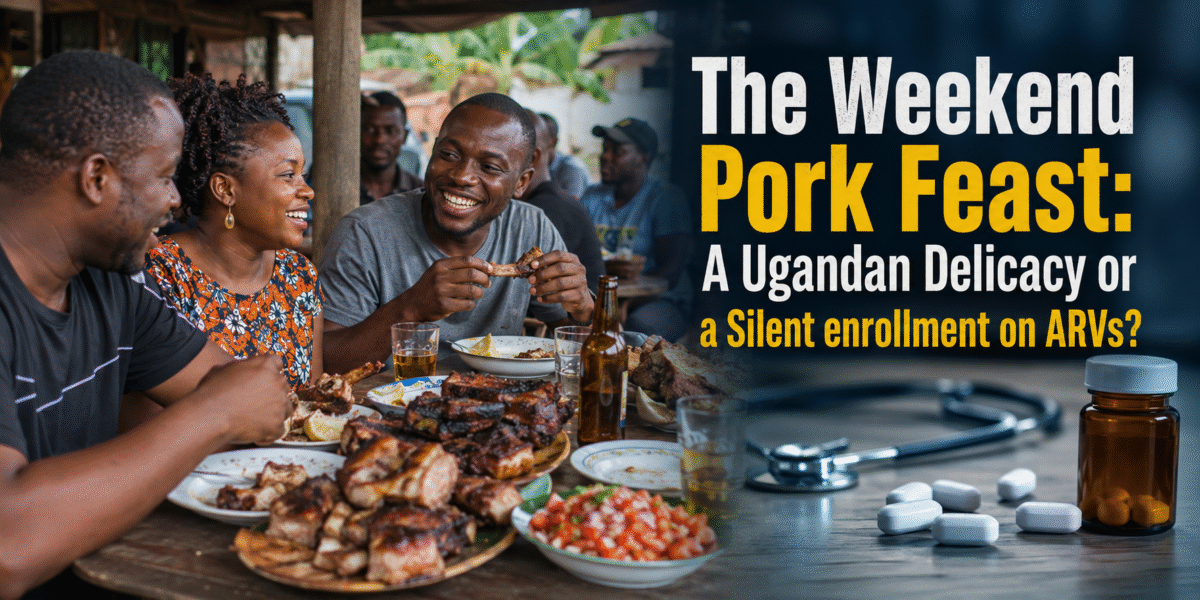
For millions of Ugandans, weekends are synonymous with the aroma of roasting pork at local joints. Uganda ranks top in pork consumption in East Africa, making this delicacy a cherished part of our social fabric. But as we commemorate World Food Safety in June, we must ask: Does the safety and dignity of this beloved dish match its popularity?
The Evidence from Uganda: A Sobering Reality
Research led by the International Livestock Research Institute (ILRI) and partners paints a troubling picture. A nationwide study across Uganda found an overall Non-typhoidal Salmonella (NTS) prevalence of 19.2% across the pork value chain. At slaughterhouses, contamination rates were alarming: 46.7% in floor swabs, 30.5% in carcass swabs, and 20.5% in pig faeces. At retail points, 33.8% of pork chopping surfaces and 33.1% of raw pork samples tested positive for NTS. Sixty-one serovars were identified, with significant overlap between those found in humans and along the pork value chain.
Even more concerning, S.Typhimurium predominant in humans exhibited multi-drug resistance. A 2018 study of 674 samples from 77 pork restaurants in Kampala confirmed 8% as Salmonella Enterica, with high levels of phenotypic and multidrug resistance observed.
The Silent Accumulation: Antimicrobial Resistance (AMR)
The danger is not always immediate; it accumulates. A 2025 study tracking 70 Ugandan pig farmers over a year found that pigs in semi-intensive systems were 2.2 times more likely to exhibit AMR than those in free-range systems. AMR prevalence increased by 0.76% each month. Potential AMR transmission events were three times more likely on semi-intensive farms (OR = 3.16). Farmers reported using antimicrobials as growth promoters, a practice that developed from the observation that these drugs seem to cause rapid weight gain in humans. To explain it briefly is that increasingly pig farmers add Anti Retrovil drugs FOR HIV in pig feed in addition to growth hormones, fondly advertised as Wonder Pig and others.
Slaughterhouse Hazards: Workers at Risk
Slaughterhouse workers face direct exposure. NTS infection was significantly associated with eating, drinking, or smoking while working (OR = 1.95). Poor hygiene and handling practices contribute to the buildup and propagation of contamination. About 76% of pigs are processed in small facilities with generally poor hygiene conditions.
A Joint Call: Food Safety Meets HIV/AIDS Protection
This is not merely an agricultural issue; it is a health emergency. People living with HIV/AIDS have compromised immune systems, making them disproportionately vulnerable to foodborne pathogens and drug-resistant infections. They cannot afford the “silent load” of antibiotic residues that a healthy individual might tolerate. In addition, the use of ARCs in pig feeds suggests misuse or poor adherence to drugs by HIV patients. Further, it also suggests that pork consumers are exposed to small but accumulated dosages of ARVs pre-enrollment.
I call on HIV/AIDS prevention, treatment, and care actors to join hands with food safety advocates. Clinicians must integrate food safety risk assessments into nutritional counseling. Food governance must prioritize vulnerable populations in surveillance and enforcement. Protecting the food system is protecting the health system.
The Road Forward
To producers: Ethical farming and transparent supply chains are your greatest assets. Safety is not a cost it is an investment in our collective future.
To consumers: Demand traceability. Buy from verified sources. Your choices shape the market.
To health partners: Let us break our silos. Let us design joint awareness campaigns that explain the direct link between farm-level practices and therapeutic failure.
Let us transform World Food Safety Month into a collective commitment. The human right to adequate food is not just about filling plates; it is about ensuring the safety, dignity, and integrity of every single bite. Our weekend delicacies must become pillars of health, not harbingers of resistance.