
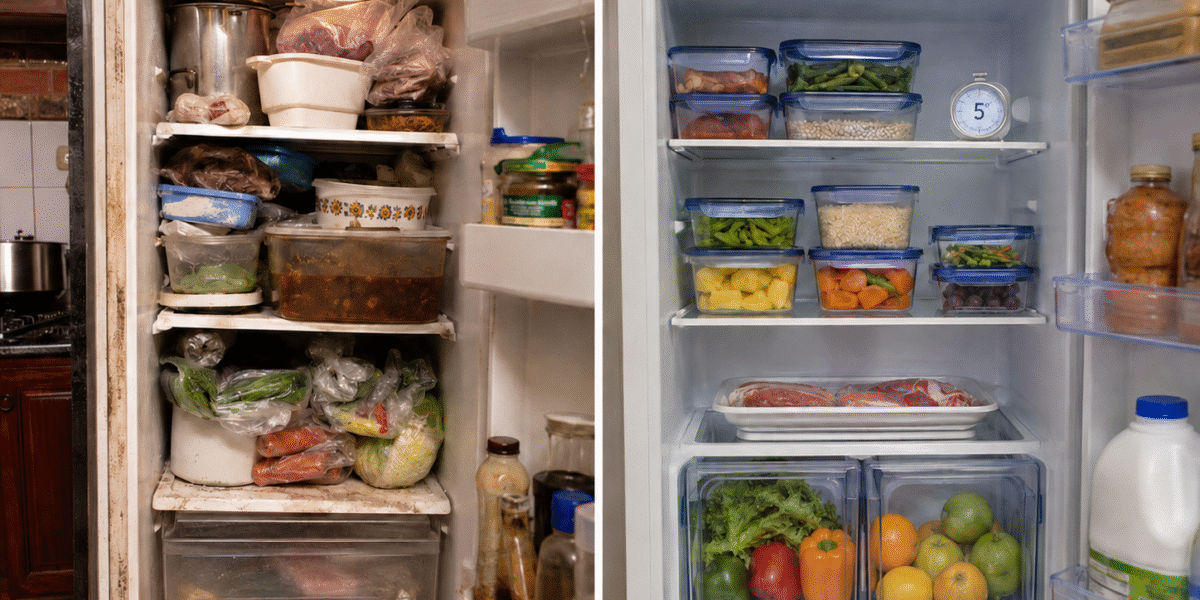
In Uganda’s hospitality sector and among the middle- and upper-class homes, the refrigerator is a cornerstone of food storage. Yet, common practices in our homes and hotels can turn this preservation tool into a breeding ground for illness. A study in Kampala found that 56.7% of refrigerators were contaminated with Staphylococcus aureus above detection limits, with the pathogen also present on 60% of food handlers’ hands (Muyanja et al., n.d.). E. coli has similarly been detected in restaurant food samples, particularly in higher-class establishments (Nabaggala, 2023).
Common Contaminating Practices
Many of us overfill our fridges, blocking air circulation and causing uneven cooling. We also leave leftovers in large, deep containers, which cool too slowly and allow bacteria like Clostridium perfringens to multiply. At the hotel level, poor hygiene among food handlers remains a major concern. Research shows 53.1% of food vendors around Ugandan hotels exhibit poor food safety practices (Galiwango et al., 2025).
Good vs. Bad Cleaning Habits
Bad: Using harsh chemicals that leave residues, or neglecting door seals where mould thrives.
Good: Regular cleaning with a solution of warm water and detergent, and wiping up spills immediately to prevent cross-contamination.
The Power Surge Threat
Uganda’s unreliable power grid poses a serious risk. Voltage spikes damage refrigerator compressors, while prolonged outages cause perishables like meat and milk to become unsafe within hours. Foodborne illnesses are likely to rise if outages persist (Mulengeranews, 2025).
What to Store and How
- Use shallow, food-grade containers with tight-fitting lids for leftovers and fresh produce.
- Always store raw meat at the bottom to prevent drips onto other foods.
It is recommended to:
1. Keep your fridge at or below 5°C.
2. Cool leftovers in shallow containers before refrigerating.
3. Clean your fridge weekly with detergent and water.
4. Install a fridge guard to protect against power surges.
5. In case of a power outage, keep the door closed; if it lasts over four hours, discard the food (World Health Organization, n.d.).
Your refrigerator is a powerful tool for food safety. Use it wisely.