
Thirteen years ago, I stood at a crossroads. I had crystallised a vision to institutionalise the Food Rights Alliance, long after 15 years of its operation as a loose network, into an institution that would strengthen food systems governance in Uganda and beyond. But there was no roadmap, no formal incubation system, no pipeline for turning a passionate conviction into a functioning Civil Society Organisation (CSO). In a country without structured systems to support emerging visionaries, building an organisation from scratch felt less like laying bricks and more like trying to build a boat while already drowning.
Our early days were tough, rough, messy, and at times humbling. We leaned heavily on peer learning, intuition, and sheer will, but we quickly realised that credibility isn’t granted; it is earned. That’s when we embraced quality assurance mechanisms not as a bureaucratic checkbox but as our organisational compass.
QuAM (NGO Quality Assurance Certification Mechanism) is a self-regulatory peer assessment tool developed by and for Ugandan NGOs. Think of it as a mirror that forces you to confront your own institutional health. QuAM evaluates CSOs across key areas: governance, financial management, safeguarding, and monitoring & evaluation, awarding Basic, Standard, or Advanced certificates. For a young organisation like ours, pursuing QuAM meant building transparent board structures, clean audit trails, and robust accountability systems not for donors, but for all stakeholders we serve.
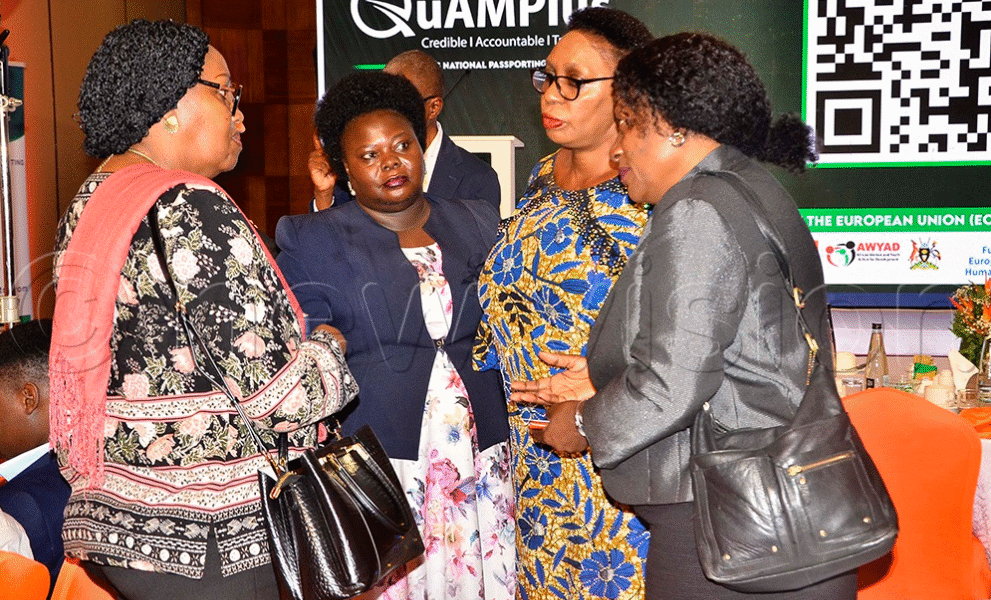
And this week, at the Sheraton Kampala Hotel, I witnessed history under the stewardship of CARE International in Uganda. The civil society fraternity gathered for the official launch of QuAMPlus a digital due diligence passport gateway.
So does this passport plug the gap? Let me be direct: Yes, but not alone.
For years, local CSOs in Uganda have endured duplicative due diligence processes and numerous compliance requirements that keep emerging. Five different assessments for five different donors, consuming precious time and resources. As one speaker powerfully asked, “Why go through 5 different due diligence assessments from 5 donors?”. QuAMPlus offers a single digital gateway showcasing an organisation’s CAT (Capacity-Sharing, Accountability, and Trust) credentials, allowing partners to verify credibility with a few clicks.
But a tool is only as powerful as its adoption. The real gap lies upstream: Will donors, especially international headquarters, accept QuAMPlus as a credible assessment? As one leader noted, “End users, especially our respective headquarters, need to accept this assessment tool as credible.”
Now, to the million-dollar question: Can governance structures and partners trust QuAMPlus to make the Localisation agenda a reality?
I have studied the platform at https://quamplus.org/, consulted colleagues from the sector, and reflected on my participation in this process since 2024, where we reimagined QuAM as a multi-purpose vehicle. Here is my verdict: QuAMPlus has immense potential, but trust is not automatic it is built.
For Localisation to shift from rhetoric to reality, three conditions must hold. First, INGOs must practice what they preach, moving beyond “giving money is different from promising to give money”. Second, donor headquarters must harmonise their due diligence standards to recognise QuAMPlus certification. Third, local CSOs like Food Rights Alliance must step up, owning the process and defining our own standards rather than waiting for external validation.
QuAMPlus earned my trust because it was co-designed with Local civil society, INGOs, government, and donors, over 60 organisational development standards were revisited, and gaps addressed. It can not be perfect in a dynamic world, but it is ours.
From building an organisation in an unforgiving ecosystem to standing at the Sheraton witnessing a game-changing passport gateway, this journey has taught me that systems don’t create leaders; leaders create systems. QuAMPlus is not the destination. It is the bridge we have long needed to cross into a truly localised, trusted, and accountable civil society sector.
The seeds we planted years ago are finally sprouting. Now we must water them together.