
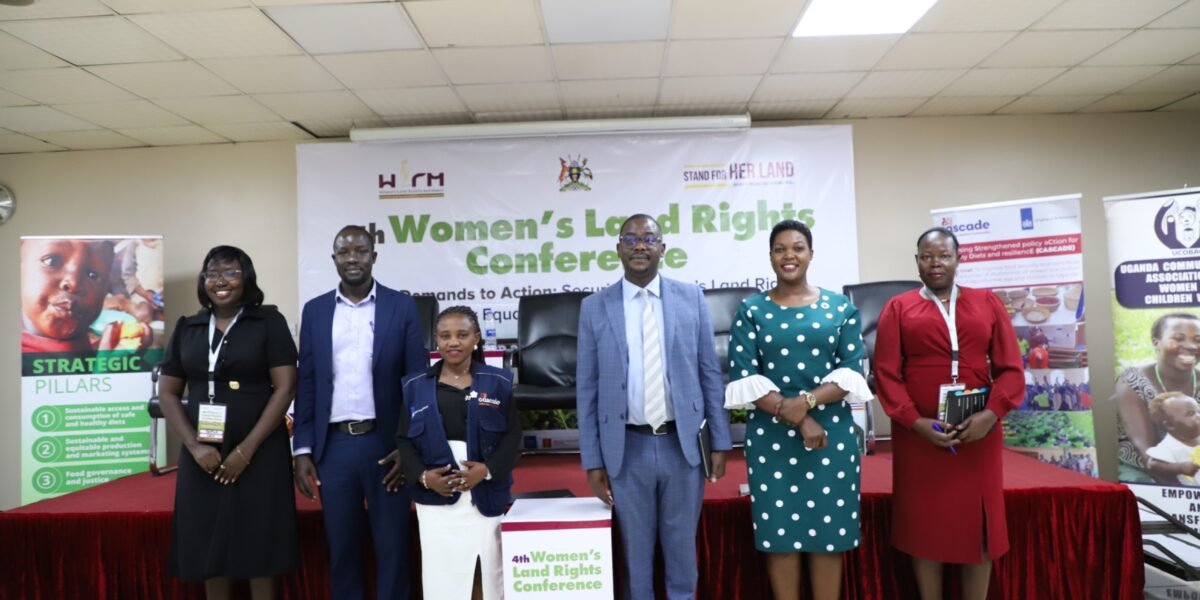
On Friday, 16 October 2026, the Food Rights Alliance (FRA), through the CASCADE project, facilitated a high-level panel discussion titled “Cultivating Equity: Women’s Land Rights and Food Security“ at Hotel Africana. The panel was held on day two of the 4th Women’s Land Rights Conference, which ran for two days, 15th and 16th October, under the theme “From Demand to Action: Securing Women’s Land Rights for Equity and Empowerment.” The conference brought together researchers, government officials, civil society leaders and grassroots women to ask one question: how do we turn women’s work on the land into real ownership, control and food security?
Keynote Address: Women do the work, but men hold the land
Dr. Peterson Kikomeko of Kyambogo University opened the session, delivering the keynote on behalf of the lead researcher, Dr. Joweria Nambooze. The keynote address drew on two 2024 studies supported by CASCADE, a Gender and Social Norms Analysis and a Barrier Analysis. Together they covered about 15 districts and three cities across six sub-regions: Acholi, Busoga, Karamoja, Lango, Tooro and Western Uganda. The first study alone involved more than 1,000 households and 104 key informant interviews and focus group discussions.
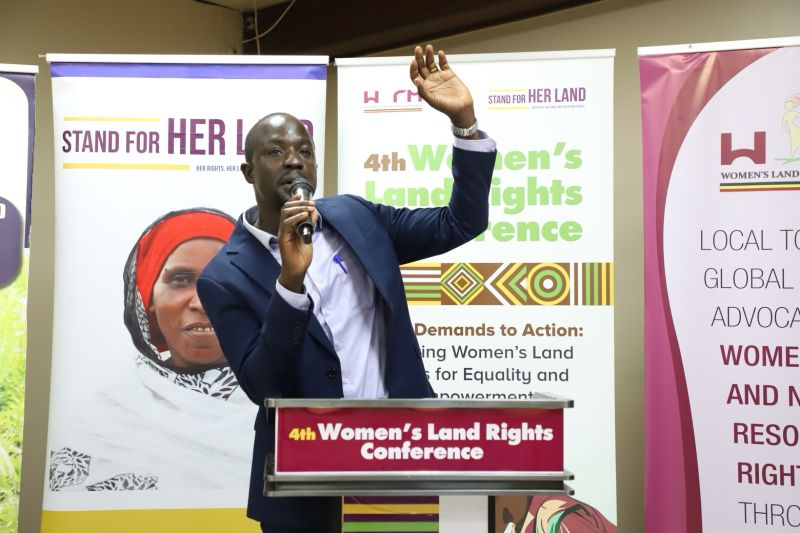
Dr. Peterson Kikomeko presenting the Keynote address during the 4th Women’s Land Rights Conference.
The central finding was a gap between women’s responsibilities and their authority:
- Women carry about 67.7% of child-feeding activities, yet only 16.7% are the main decision-makers on major household expenditure.
- About 70% of the land covered by the study is owned by men, and only 27% of the land women use for farming is reported as owned by women.
- Only 26% of women surveyed met the minimum dietary diversity threshold.
The keynote named the barriers behind these numbers: customary norms that can override constitutional protections, gender-based violence that leads to eviction and loss of produce, financial constraints, and the vulnerability of widows and cohabiting women. It also challenged enterprise programmes, including the Parish Development Model (PDM), to assess women’s access to land before financing them. As he concluded, Dr. Peterson set the tone for the day by emphasising that meaningful land rights mean secure tenure, productive opportunities, and effective control over decisions on harvests and household income.
The Panel Discussions
Mr. Grace Bananukye Bwengye, National Planning Authority (NPA): the national policy lens. Mr. Bwengye explained how the Fourth National Development Plan (NDP IV, 2025/26 to 2029/30) treats women’s empowerment as central to Uganda’s transformation. He pointed to the scale of the problem: only about 30% of land is registered, and only about 5.7% of adults hold registered titles. The plan prioritises faster title processing, online land services and more Certificates of Customary Ownership, with a target of reaching one million people. He also called for labour-saving technology and clean cooking energy to ease women’s unpaid care burden of about 6.6 hours a day, compared with four hours for men. He added that the government has allocated UGX 5 billion this financial year to food and agricultural safety, and that it wants to raise national food security from about 70% to 85%.
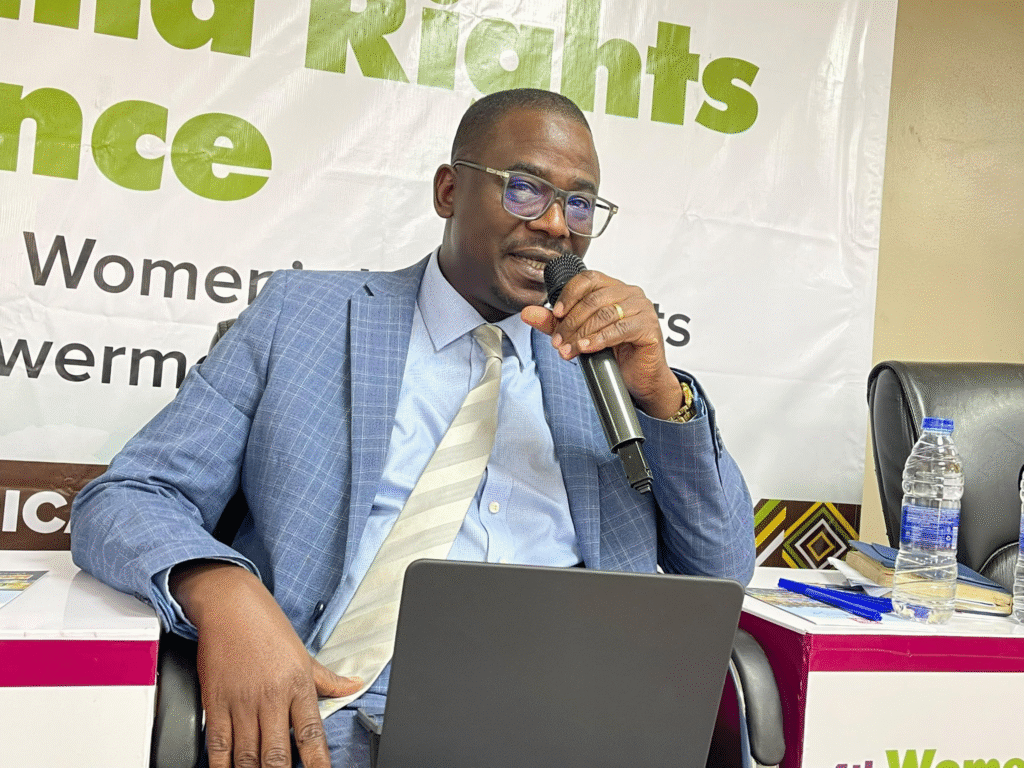
Mr. Grace Bananukye Bwengye speaking during a panel discussion at the 4th Women’s Land Rights Conference
Ms. Medius Nyabuthono, Executive Director – Kyenjojo Association of Women Development Actors: secure land as the foundation for empowerment. Ms. Nyabuthono argued that secure land rights underpin productivity, economic empowerment, climate resilience and household food security. She pointed to discriminatory norms, unequal household power and the vulnerability of widows, and warned that laws mean little where awareness and access to justice are weak. Her message was that women cannot invest in climate-smart farming or access financial services on land they do not control, and that men and community leaders must be part of the solution.
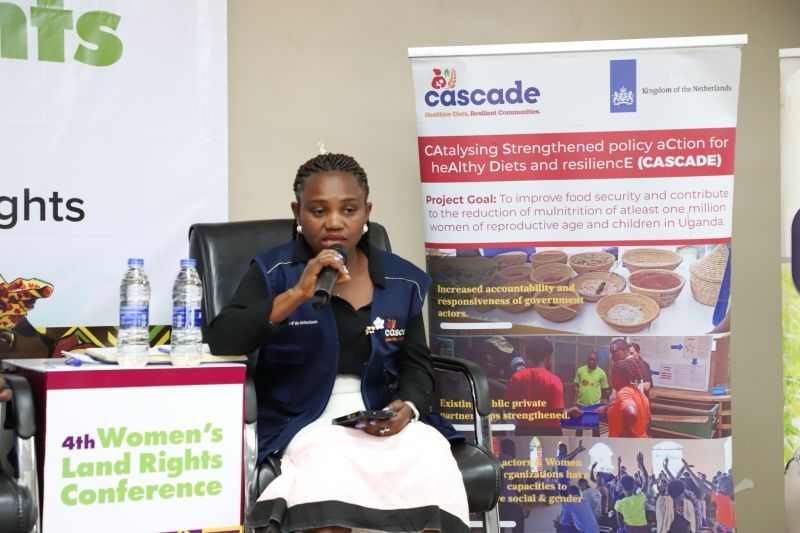
Ms, Medius Nyabuthono speaking during a panel discussion at the 4th Women’s Land Rights Conference
Ms. Sandra Namarome, a representative of the Ministry of Local Government: matching enterprise to land access. The ministry’s representative stressed that giving women money is not enough if they lack secure access to land. She gave the example of a woman financed to grow coffee on land she does not control, where it is unclear who benefits from the harvest. She reported that about UGX 4.3 trillion had been released under the PDM, reaching more than 3.5 million beneficiaries. Women with limited land were encouraged to choose space-efficient enterprises such as poultry and to add value, for instance by processing groundnuts instead of selling them raw. She also highlighted local councils as the first point of contact for women facing land injustices.
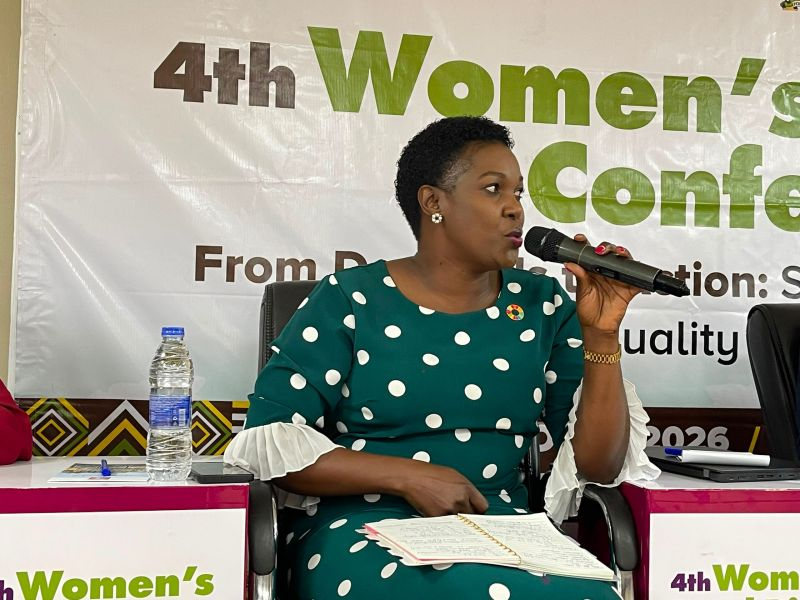
Ms. Sandra Namarome speaking during a panel discussion at the 4th Women’s Land Rights Conference
Ms. Lucy Imalingati: from awareness to action. Ms. Imalingati insisted that women’s land rights and food security are inseparable. She told of a woman who farmed her household’s land, only for her husband to arrive with a lorry at harvest and take everything. Access to land, she said, is not ownership or control. She urged the women’s movement to move beyond awareness-raising to structured community dialogues that include widows, legal practitioners, community leaders and male youth. She also called for stronger enforcement of existing laws and for grassroots women to have a real voice in decisions on land, climate and livelihoods.
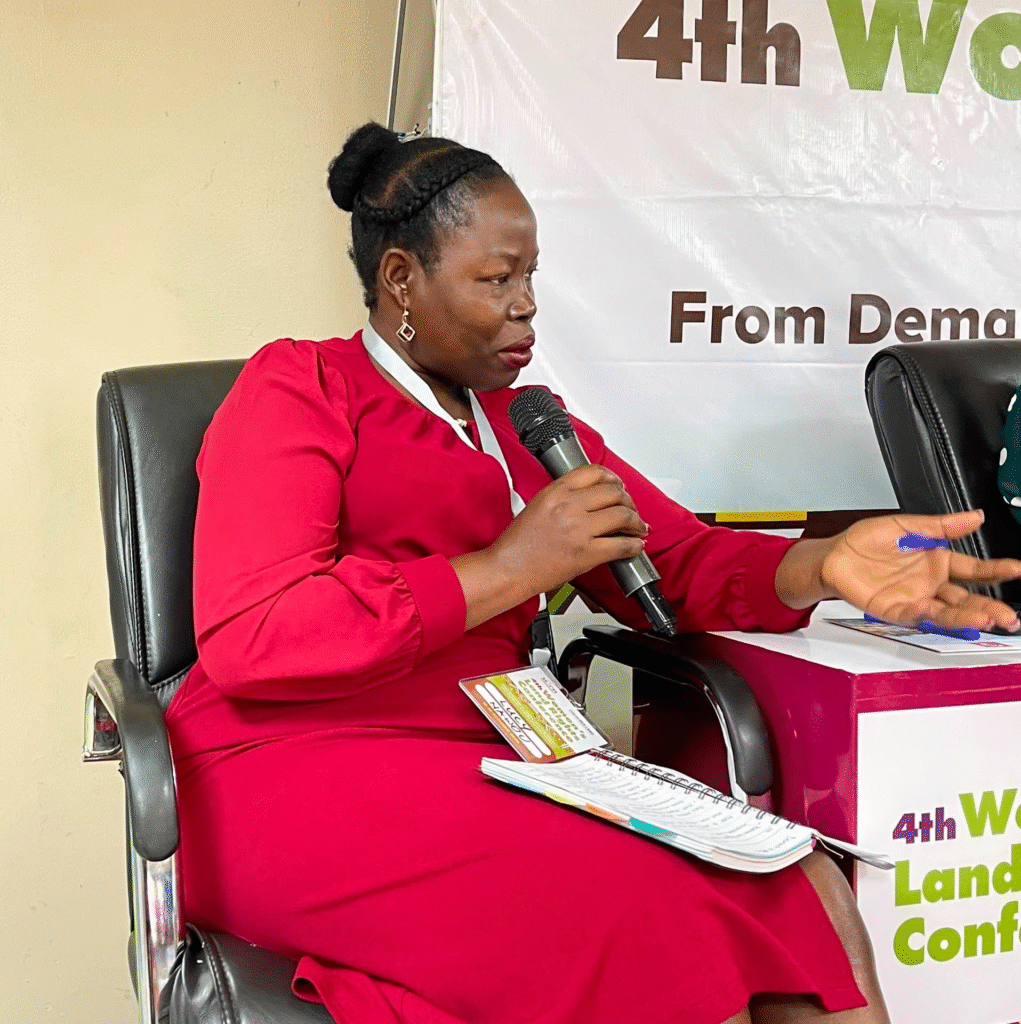
Ms. Lucy Imalingati speaking during a panel discussion at the 4th Women’s Land Rights Conference
Voices from the floor
Participants gave the panel a reality check. Grassroots women said government programmes are not reaching those without registered land, formal jobs or other assets, and asked planners to distinguish between the needs of elite and grassroots women. Women with disabilities raised concerns about exclusion from land ownership and programmes such as the PDM. Women from Buvuma linked land insecurity to food shortages, poverty and children’s education, and questioned how poor women can repay PDM loans when costs rise and harvests fall short.
One grassroots leader proposed a practical fix: let women’s groups, rather than land titles, serve as the basis for PDM financing, and allow smaller loans that match what women can repay.
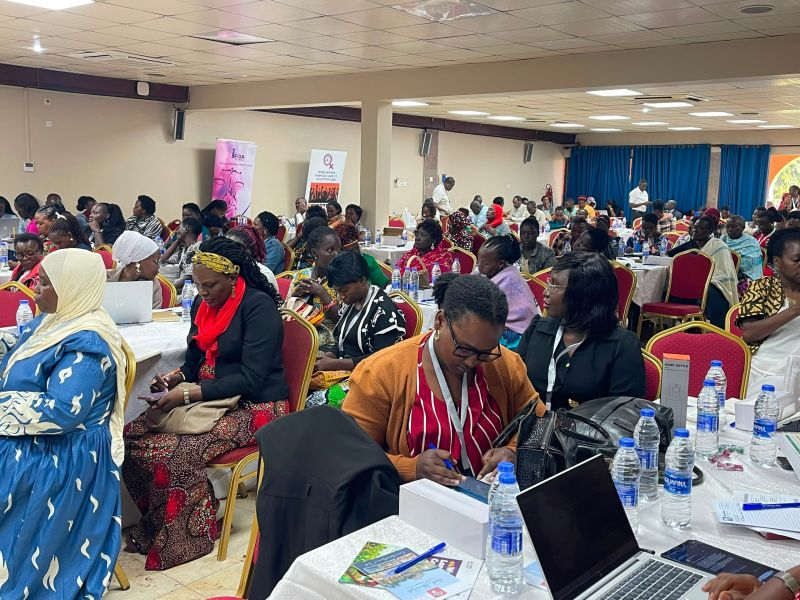
Participants attending the 4th Women’s Land Rights Conference.
What the panelists committed to?
Panelists encouraged women to organise in groups, engage local leaders so their priorities enter district plans and budgets, and understand all PDM pillars, since finance without extension services, inputs, infrastructure and markets is not enough. They asked participants to share specific cases of unserved beneficiaries for follow-up with local governments. The Ministry of Local Government committed to following up on gaps in training and financing, and the NPA emphasised that government plans must be made accessible so communities understand them and can hold institutions to account.
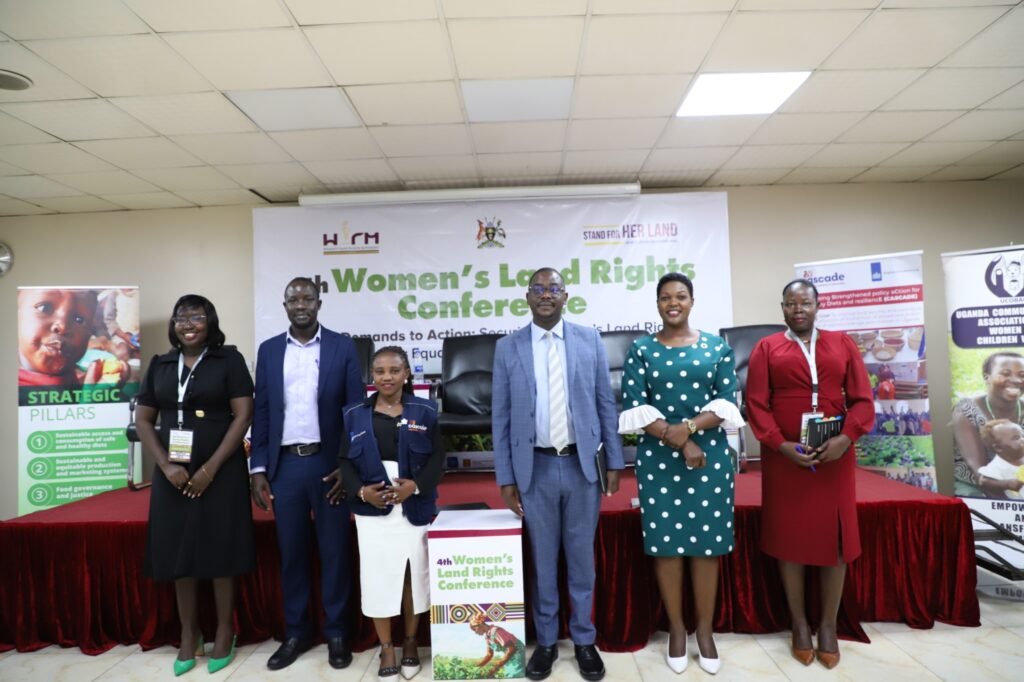
Moderator, Ms. Freda Laura Orochi (extreme left) and panelists pose for a group photo during the 4th Women’s land Rights Conference