
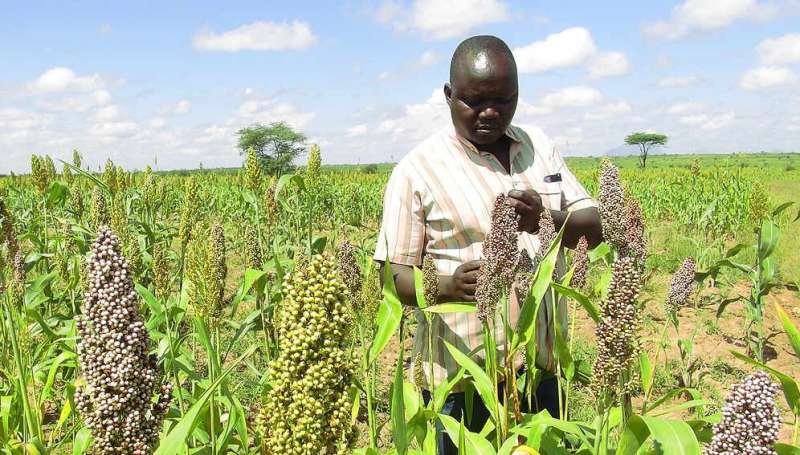
Since June, eighteen people have reportedly died from hunger in Kotido. Over 5,000 hectares of crops worth 200 billion shillings were destroyed. Children foraging for gold instead of attending school. Families surviving on beer remnants called “Adakai.”
This is Karamoja in 2026. And it is utterly preventable.
The Uganda National Meteorological Authority saw this coming. The Ministry of Water and Environment predicted the prolonged dry spell. Yet once again, we are burying our dead and rationing relief while policy recommendations gather dust on ministerial shelves.
The Irony Beneath Our Feet
Here is the paradox that should shame every policymaker in Kampala: Karamoja is one of Uganda’s most resource-rich regions. Recent aerial surveys confirmed over 300 million tonnes of limestone and marble in Moroto, Kotido, and Napak districts alone. The region harbours significant deposits of gold, copper, iron ore, lithium, uranium, and rare earth elements.
Yet mothers watch their children waste away while they walk over gold.
The late Israeli leader once reportedly remarked that if Israel possessed Karamoja, it could feed all of Africa. This was not arrogance; it was a recognition of potential. Israel, a nation two-thirds desert, has turned water scarcity into agricultural abundance through drip irrigation technology that reduces water use by nearly 60% while increasing yields by 40%. Today, Israel recycles over 85% of its wastewater for agriculture, the highest rate globally. Egypt, meanwhile, is investing $15 billion in its New Delta project to transform 2.2 million feddans of desert into farmland.
What do they have that Karamoja lacks? Political will. Strategic investment. Governance that treats the right to food as non-negotiable.
The Governance Gap
Karamoja receives adequate rainfall and water flow from the Masaba and Sebei regions. The groundwater resources remain unexplored. The region could achieve food self-sufficiency if Uganda made the same choices Israel and Egypt made decades ago.
Instead, we have 580,000 people, 45% of Karamoja’s population, in crisis-level food insecurity. Over 89,000 children under five face severe malnutrition. Eight of nine districts are in crisis. And the government’s response remains reactive, not preventive.
What Must Change
Uganda must learn from nations that turned arid land into breadbaskets:
A Choice
The Karamoja hunger crisis is not primarily a climate crisis. It is a governance crisis. We have the resources, the knowledge, and the examples to follow. What we lack is the courage to act.
Eighteen people have died. How many more must perish before we treat food security as the national security imperative it truly is?