
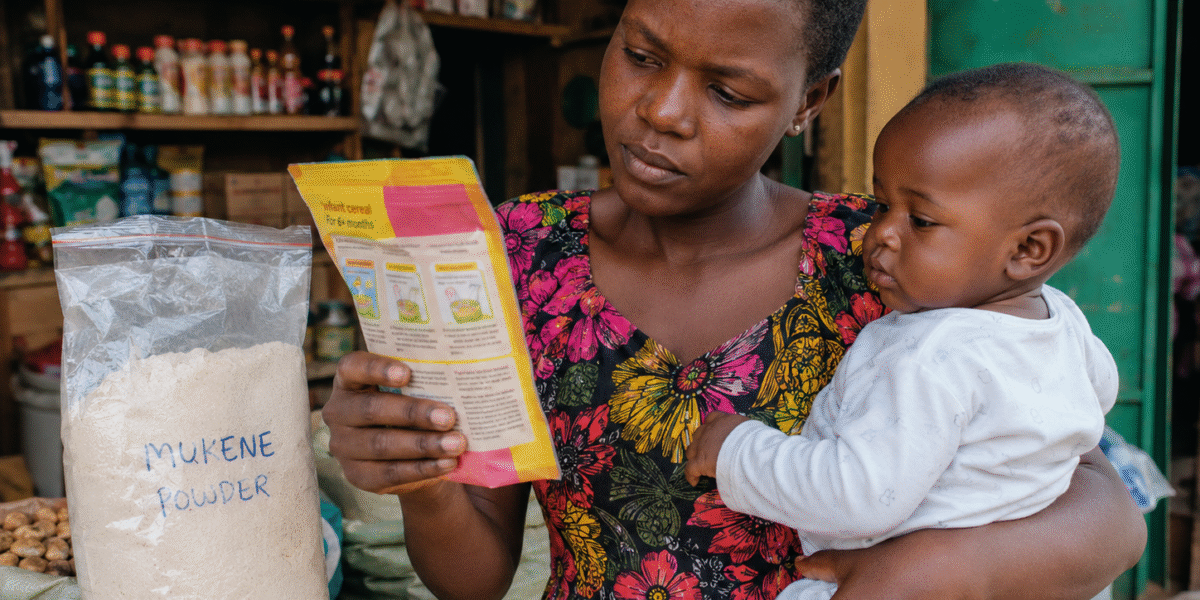
Carol’s hands are calloused from a long day at the workplace, but her heart is soft for her 10-month-old baby Tendo. She reaches for a bright yellow packet of “Baby Powder Meal,” a fish-millet blend promising “complete nutrition.” It is affordable, the vendor recommended it, and her peers in a young mother’s WhatsApp group swore their own toddlers thrived on it. Next to it, she eyes a locally ground mukene powder in a wrappex and sealed white polythene paper. She buys both.
She does not see the invisible cargo. She cannot detect the aflatoxins that may be lurking in the millet, the heavy metals from industrial processing, or the Salmonella that could have hitched a ride during the drying of the silver fish. When it comes to our babies, we buy with our eyes, our wallets, and our social circles, not with laboratory safety sheets. But the question that must keep us awake is: How safe is that baby food on Uganda’s market, really?
Why Babies Are Not Miniature Adults
Infants have immature livers, permeable intestinal walls, and a rapidly developing brain that is highly susceptible to neurotoxins. With Uganda’s stunting rate still alarmingly high at 26%, we often point to a lack of calories, yet the silent culprit is frequently chronic contamination what scientists call environmental enteric dysfunction (EED), where constant low-dose toxins inflame the gut, preventing nutrient absorption regardless of how much is eaten (WHO, 2021; UBOS, 2022).
The Invisible Threats in Every Pouch, Packet, and Powder
Whether it is a commercial jar from the supermarket or a local powder from the open market, Uganda’s baby foods share a common vulnerability: weak safety screening.
- The Cereal Risk (Aflatoxins): Most Ugandan baby foods are cereal-based (maize, millet, sorghum). Stored in humid conditions, these grains are prime targets for aflatoxin-producing moulds. Studies have detected aflatoxin levels in over 40% of locally milled weaning foods in Kampala, exceeding the EU’s strict 0.1 ppb limit for infant products (Kaaya et al., 2006). For a baby, chronic exposure stunts growth, damages the liver, and suppresses the immune system.
- The Fish Powder Hazard: Our beloved mukene and smoked fish powders often added for protein bring their own baggage. Beyond the well-documented histamine and pesticide residues, these powders frequently contain microscopic bone splinters and grit, but worse, they accumulate heavy metals like mercury when processed from larger species (Nakavuma et al., 2022). Furthermore, improper drying introduces pathogenic Clostridium and Salmonella.
- The Commercial Blends (Heavy Metals & Microbes): Even imported or locally manufactured “premium” baby cereals are not immune. A 2023 analysis of commercial baby foods in East Africa found detectable levels of lead and cadmium in several brands, often originating from the mineral contaminants in agricultural soils or processing equipment.
If Nestlé Gets Recalled, What About Our Local Mills?
It would be easy to blame only the informal sector, but the global food industry tells a stark warning. In 2021, the U.S. House Subcommittee revealed that top-tier brands like Nestlé (Gerber) and Beech-Nut sold baby foods with up to 177 times the safe limit of arsenic (House Subcommittee, 2021). This led to massive recalls of rice cereals, followed by formula recalls in 2023 over deadly Cronobacter sakazakii contamination (FDA, 2023).
Here is the gut-wrenching reality: If multi-billion-dollar corporations with sophisticated testing laboratories cannot consistently keep pathogens and heavy metals out of their supply chains, what happens in Uganda’s largely unregulated milling and packaging ecosystem? Mothers are gambling with their babies’ brains and immune systems, relying on brand colours, price tags, and peer pressure rather than scientific evidence.
We cannot ban our cultural staples or shame working mothers for seeking convenience. We must fix the system. Here is how: - Institute a “Baby-Only” Safety Standard: The Uganda National Bureau of Standards (UNBS) must create a distinct, strict regulatory category for all foods marketed for children under 3 years, covering aflatoxins, heavy metals, histamine, and microbial load, regardless of whether they are imported or locally milled.
- Mandate Batch Testing & “Traffic Light” Labelling: Every packet must display a clear batch number and a QR code linking to an online safety test result. Introduce a mandatory “Traffic Light” system: Green (Safe), Yellow (Limit to 2x/week), Red (Prohibited for infants) at the point of sale, empowering mothers to choose wisely.
- Subsidize Safe Milling Equipment: Provide low-interest loans to local millers to purchase solar-powered dryers and metal detectors, and to replace rusty machinery that leaches lead. Proper drying prevents both aflatoxins and bacterial overgrowth.
- Empower Village Health Teams (VHTs): Train community health workers to educate mothers on simple validation practices like boiling water to 70°C before mixing formula/powders to kill Cronobacter, and visually inspecting grain powders for mould or off-smells.
- Mandate “Point of Sale” Recall Displays: If a global or local recall occurs, require supermarkets and open-market stalls to visibly display a recall notice for 30 days, protecting mothers who may have missed the radio announcement
To Every Working Mother and Advocate
Carol, your love for baby Tendo is not measured by the brand you choose or the price you pay. But the time has come to shift the conversation from “What do others buy?” to “What does science say?” Ask your vendor: “When was this batch tested?” Demand transparency over flashy packaging.
We have a collective right to adequate, safe food. It is not enough to fill a baby’s belly; we must fill it with safe building blocks for their future. If global giants like Nestlé can falter, then our local markets need even fiercer vigilance. Let us build a Uganda where a baby’s first bite is a promise of brilliance, not a toxic trail of cheap luck.