
By Agnes Kirabo Lwampemula, Executive Director, Food Rights Alliance
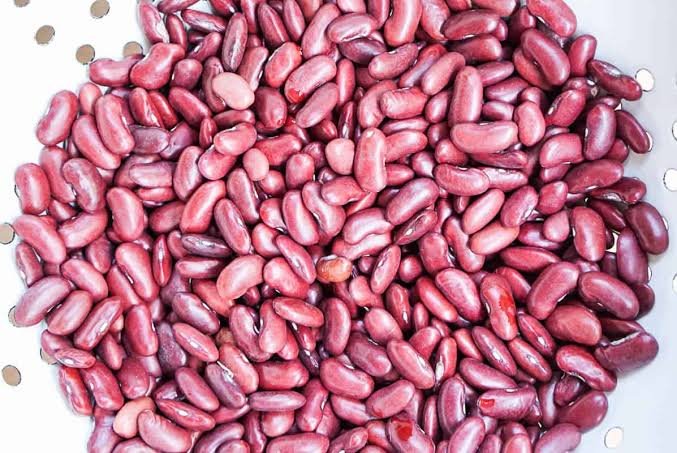
Picture a mother in Agago District on a market morning. Beans have become rare this season, so she is glad to meet a trader whose price feels fair. She buys a basin, carries it home and sets the pot on the fire. Mixed in with the beans are round, shiny grey seeds that look so ordinary that nobody pauses over them. They are not beans. They are seeds of the rubber tree.
I did not invent this scene for effect. This week the Ministry of Agriculture, Animal Industry and Fisheries (MAAIF) issued a public food safety alert saying it had received complaints and verified evidence that rubber tree seeds were being fraudulently mixed with beans sold in markets, particularly in Agago. The seeds contain cyanogenic glycosides, compounds that can release cyanide. Eaten raw or cooked together with beans, they can cause severe stomach pain, vomiting, dizziness, headaches, weakness and diarrhoea, and children are the most vulnerable. That single alert says more about the state of our food systems than most conference speeches this month.
A Theme That Deserves An Honest Answer
World Food Day 2026 was marked under the theme Innovate today. Nourish tomorrow (Food and Agriculture Organization of the United Nations [FAO], 2026). I welcome that call. Uganda has farmers, researchers, millers and young entrepreneurs doing remarkable things with seed, storage, processing and markets. But every honest innovation attracts an imitator, and some imitators have been busy in their own way. They have learned to dress poison as a bean, water as milk, syrup as honey and chaff as fertiliser. That is not innovation. It is fraud, and where the product can sicken a child, it is a crime against the public. The uncomfortable truth is that the fraudsters are fast and our governance systems are slow.
How Big is the Problem?
The World Health Organization (WHO) estimates that unsafe food causes 600 million cases of foodborne disease and 420,000 deaths every year. About 30% of those deaths, around 125,000 each year, are children under five (WHO, n.d.). The World Bank puts the cost to low and middle income countries at about US$110 billion a year in lost productivity and medical expenses (Jaffee et al., 2018). These figures cover all unsafe food, not only fraud, but fraud is the part that hides best, because the buyer cannot see it, smell it or taste it until the harm is done.
Uganda’s own picture is sobering. The Global Initiative Against Transnational Organized Crime (2026) reports, citing official national research, that over half of the products sold on the Ugandan market across sectors are counterfeit, and that 90% of those are substandard. In agriculture, estimates suggest that 30% to 50% of seeds and more than 60% of pesticides are fake, and nearly 46% of agro input businesses operate without national registration. With about 70% of Ugandans depending on agriculture for work, a fake seed is not a small commercial offence. It is a lost season for a whole household.
The Uganda National Bureau of Standards (UNBS) carried out 6,642 inspections in the 2025/2026 financial year and seized more than 880 tonnes of substandard products worth about Shs3 billion. About 76% of the 2,622 manufacturing facilities inspected complied with standards, which leaves nearly one in four that did not (Pulse Uganda, 2026). In October 2026 MAAIF inspectors in Masindi checked 17 agro input shops, closed five and impounded fake and expired inputs worth Shs30 million (The Cooperator News, 2026). These are real efforts. They are also a reminder of how much is still getting through.
What Fraud Looks like When Prices Rise?
Fraud does not move evenly through the year. It follows prices. According to the Uganda Bureau of Statistics, annual inflation for food crops and related items more than doubled, from 2.1% in August to 4.5% in September 2026, driven by higher prices for dry beans, milk, fresh cassava, sweet potatoes and green cabbage after weather disruptions (Daily Monitor, 2026). Whenever a common item in the daily basket becomes scarce or expensive, honest supply shrinks and dishonest supply finds its moment.
Beans are the freshest example, with rubber seeds hiding in the heap. Milk is another. Commentators and regulators have long pointed to watered and doctored milk, and the Anti Counterfeit Hub Africa has warned that counterfeit dairy products, infant formula and beef are reaching Ugandan consumers (Daily Monitor, n.d.-a). Honey is stretched with syrups and sugar. Stones are added to rice to build weight. Maize flour is slipped into wheat flour to stretch it. Fish is treated with unauthorised chemicals. Cooking oil is reused until it turns black, and in 2017 UNBS seized more than 2,000 litres of adulterated cooking oil in Bugiri, siphoned from tankers carrying crude oil and sold to roadside food vendors (Daily Monitor, 2017; Daily Monitor, n.d.-b). In 2024, 700 bags of underweight sugar in branded sacks were seized in Soroti (Pulse Uganda, 2024).
Think about who pays for this. It is the woman who buys a few cups of flour at a time because that is all her cash allows. It is the roadside chips seller who bought the cheapest oil because her margin is thin. It is the farmer who spends her last savings on a seed packet that carries a trusted label and nothing else. In 2026, the International Year of the Woman Farmer, we should say plainly that the women who feed our households are the least protected when food and inputs are faked. A lost harvest to her is rent, school fees and the next meal.
The Risk We Prefer Not to Say Aloud?
There is a harder conversation hiding behind the fraud. The WHO has warned that malicious contamination of food for terrorist purposes is a real and current threat, and that deliberate contamination at one location could have global public health consequences (WHO, 2002). In truth, most known cases of deliberate tampering have been driven by profit rather than ideology (S. Rajaratnam School of International Studies, 2009). The melamine scandal in China in 2008 showed what profit alone can do. Infant formula was deliberately adulterated, about 300,000 infants and young children suffered kidney and urinary tract effects, and six died (Gossner et al., 2009).
Here is the point for Uganda. The weaknesses that let a greedy trader mix seeds into beans are the same weaknesses that would let someone with darker intentions introduce something far worse. Unregistered dealers, unmarked sacks, little traceability, thin laboratory coverage and slow alerts do not discriminate between motives. If a fraudster can poison a heap of beans for a few extra shillings, we must ask what a person who wants to hurt a school, a market or an army barracks could do. Food fraud is therefore not only a consumer protection issue. It is a public safety and national security issue, and bioterrorism is the extreme end of the same road.
Food Has Left The Farm Gate
For decades we treated food as a production question. If yields were good, rain was reliable and extension officers visited, food was considered handled, and it sat mainly with the ministry of agriculture. That is no longer the whole story. Today a plate of food has passed through input shops, transporters, aggregators, mills, packagers, border posts, supermarkets, mobile money agents and roadside kitchens before it reaches a child. Each step is a possible point of fraud, and most of them lie outside what a department of agriculture was built to watch.
The cracks are easy to see. As the state stepped back from marketing, input supply and direct extension during the liberalisation years, a large and informal trade grew in the gap, much of it honest and a great deal of it unregulated. Responsibility is shared between MAAIF, UNBS, the Ministry of Health, local governments, the Uganda Revenue Authority and the Police. When everyone holds a piece of the mandate, no one owns the whole chain, and fraud walks through the spaces in between. The Anti Counterfeit Hub Africa has also noted that the absence of clear laws on counterfeit food makes prosecution difficult (Daily Monitor, n.d.-a).
Government is moving. On 21 October 2026 the Minister of Agriculture told Parliament that Cabinet had decided to establish a Food and Agriculture Regulatory Authority with full power and resources to fight counterfeits and contaminants in food, agriculture and veterinary inputs, and he asked legislators to give the Bill priority. He also reported ten operational zonal offices to monitor agro dealers (New Vision, 2026). That is a welcome step, and I hope the House answers quickly.
What We Are Calling For?
First, food fraud should be criminalised in clear, specific law. Knowingly adulterating, substituting, mislabelling or misrepresenting food should be an offence in its own right, with penalties that outweigh the profit, including forfeiture of proceeds and loss of trading licences. Penalties should rise sharply where health is harmed or children are put at risk, and deliberate contamination of food should be treated as a grave offence on a par with terrorism.
Second, security agencies must become active partners in food systems transformation. The Police, intelligence services, customs officers and prosecutors need training, mandate and shared data to investigate food crime as they investigate other organised crime, following money and networks and not only the shopkeeper who happens to be caught. Food is a matter of national security, and our security architecture should say so.
Third, the regulatory authority must be passed, funded and made independent enough to act without fear. It should run one national register of agro input dealers and food traders, require batch marking and traceability for high risk products, and operate a public hotline and alert system. Local councils, village health teams and market leaders should receive the alerts in local languages, because a warning that stays in Kampala protects no one in Agago.
Fourth, we must protect the honest majority. Women traders, small millers and smallholder farmers need simple ways to verify products, safe channels to report suspected fraud, and protection from retaliation. Consumers also have a role, from sorting beans carefully before cooking to buying from trusted traders and reporting what looks wrong. Finally, East African countries should align their laws and share intelligence, because fraudsters do not respect borders and our food moves across them every day.
Innovate, but guard the plate
Innovation will nourish tomorrow only if what reaches our plates today is what it claims to be. We cannot celebrate improved seed while fake seed flourishes next door, and we cannot talk about nutrition while a child eats a poisoned seed in a bowl of beans. Let this World Food Day season be remembered as the moment Uganda decided that food fraud is a crime, that food safety is a security matter, and that the people who feed the nation deserve a state that has not retreated from the market. The fraudsters are already running. It is time our governance systems caught up.